From coffee tree to cup: How coffee is grown and what’s inside a coffee cherry
Growing coffee isn’t just planting and harvesting—it’s a long, delicate process that depends heavily on climate. To understand why one coffee can taste so different from another (in aroma, flavor, and mouthfeel), it helps to start at the source: where the coffee tree grows, how long it takes to produce, and what layers make up a coffee cherry.
Where coffee is grown: the “Coffee Belt” and altitude
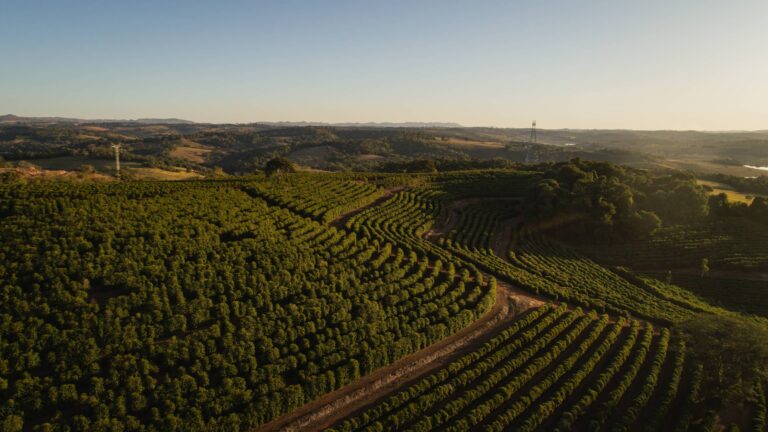
Coffee grows mainly between the Tropics of Cancer and Capricorn—an area known as the Coffee Belt. These latitudes offer relatively stable temperatures and rainfall patterns that support fruit development.
Altitude is another key factor. Many farms sit—very generally—between 200 and 2,000 meters, depending on the country, variety, and microclimate. At higher altitudes, nights are often cooler and cherries ripen more slowly, which can translate into more complex flavor profiles.
Coffee tree timeline: patience before productivity
A seed takes time to become a plant capable of producing fruit. In general, it takes 3 to 5 years for a coffee tree to enter a truly productive phase (though it may produce a few cherries earlier).
- Early years: growth and plant formation.
- From ~3 years onward: more stable production begins.
- Average productive lifespan: around 15 years, though this varies with agronomic practices, variety, and farm conditions.
In terms of yield, a single plant can produce roughly up to 900 g of green coffee per year (as a general reference), which helps explain why quality coffee requires so much work per kilo.
What the coffee plant looks like: shape, leaves, and pruning
The coffee tree typically has a conical shape, flexible branches, and thick, glossy, evergreen leaves that can reach around 20 cm. In its “natural” form it can grow quite tall (roughly 8–12 m), but on farms it’s usually pruned to 2–3 m to:
- improve productivity,
- make harvesting easier,
- and help manage the tree’s health.
Flowering and ripening: from jasmine to cherry
Coffee flowering is as spectacular as it is brief. It lasts only about three days, with fragrant white blossoms often compared to jasmine. Flowering typically happens after rainfall.
One important detail: if rains are irregular, flowering can occur in waves—meaning cherries may ripen at different times. That makes harvesting more complex and requires greater precision when selecting ripe fruit.
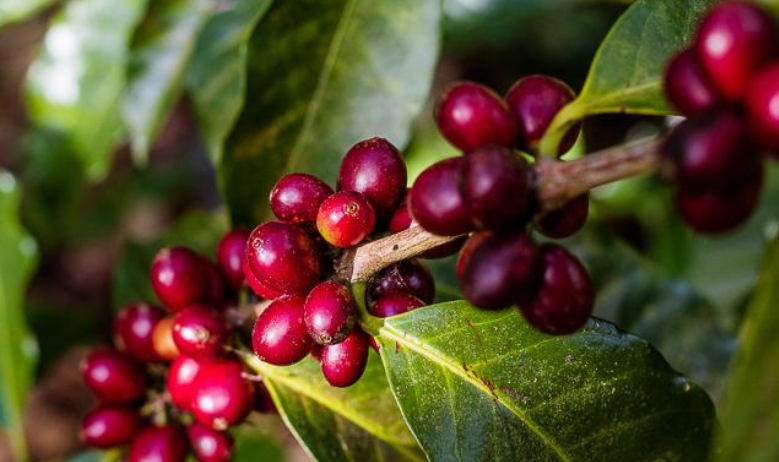
After flowering, the coffee cherry takes 6 to 12 months to ripen depending on the variety and conditions. It shifts from green to shades of yellow, orange, or red—in many different tones—when it’s ready to be picked.
Coffee cherry anatomy: what gets roasted and what gets removed
A coffee cherry isn’t “just” a red skin. It’s a fruit made up of several layers, and each one can influence the final result—especially during coffee processing.
From the outside in:
- Outer skin (epicarp): the protective outer layer.
- Pulp (mesocarp): the fleshy layer.
- Mucilage: a sticky, sugary, gelatinous layer (key in washed, honey, and natural processes).
- Parchment (endocarp): a hard membrane around the seeds; often called the “parchment.”
- Silver skin (tegument): a very thin layer attached to the bean.
- Coffee bean (endosperm): the seed—the part that is ultimately roasted and consumed.
A cherry typically contains two beans. Size and shape can vary widely: there are many species and, within each, many different varieties.
Arabica and Robusta: the two most cultivated species
In the coffee world, two species dominate:
- Arabica coffee: prized for its aroma, acidity, and sensory complexity (depending on origin and process).
- Robusta coffee: often noted for its body, intensity, and agronomic resilience.
Knowing the difference between Arabica and Robusta helps explain why flavor, aroma, and the overall cup experience can change—well before we even talk about roasting or brewing methods.