Daterra Coffee (Brazil): Specialty Coffee with Regenerative Farming and a Bio-Smart Vision
Daterra Coffee is much more than a producer—it’s a team of people who live and breathe coffee with a rare mix of passion, method, and purpose. And you can taste it where it matters most: in the quality of their specialty coffee, the consistency of each harvest, and a way of working where sustainability isn’t a slogan, but a long-term commitment.
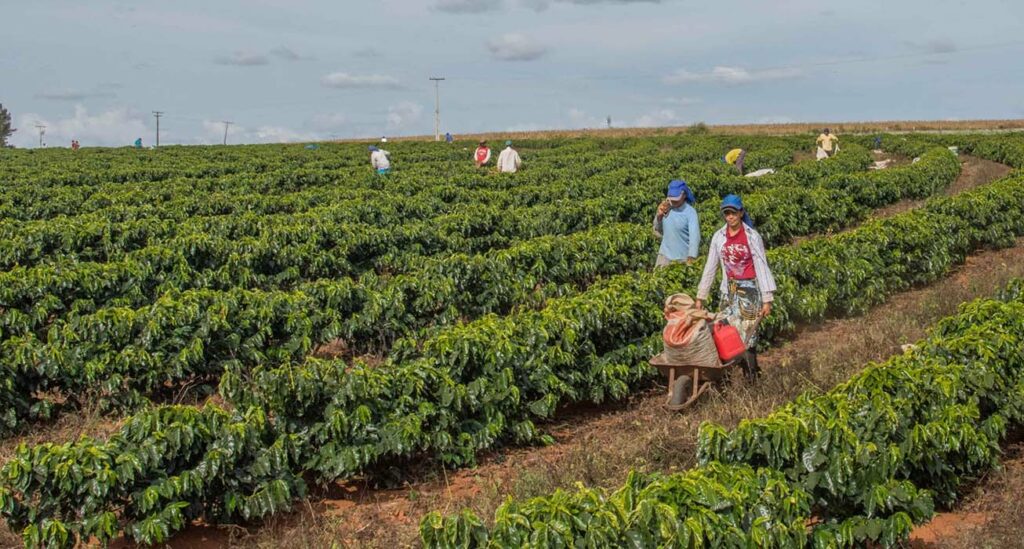
With more than 35 years of experience and a team of 400+ people, Daterra has become a benchmark in Brazilian coffee for a simple reason: they’ve proven you can produce outstanding coffee while caring for—and improving—the environment that makes it possible.
Behind the project is Luís Norberto Pascoal, founder and president of Daterra Coffee—an entrepreneur who found in coffee the perfect meeting point between exceptional quality and a model that is truly sustainable.
At Mare Terra Coffee, we’ve worked with Daterra for years because we share the same belief: specialty coffee doesn’t start at the roaster. It starts at origin—in the daily decisions on the farm and in the way people relate to the land, the water, and the community.
From a regenerative project to specialty coffee
Daterra began with a clear intention: to develop a regenerative agriculture project capable of balancing three goals that rarely align:
- giving back to the planet and the environment,
- supporting people and the community,
- while remaining economically viable.
In the early years, they explored several agricultural paths (timber, livestock, fruit, dairy…) until they tried coffee—and everything clicked. Why coffee? Because it’s a perennial crop: to grow it well, caring for the ecosystem isn’t optional—it’s the core of the system.
And when the idea of specialty coffee began gaining momentum, Daterra understood something essential: focusing on quality and differentiation helps build resilience and reduces dependence on commodity market volatility.
The more they studied coffee, the clearer it became: to do it right, they needed total focus. And that focus is exactly what defines them today.
Sustainability today: why “being sustainable” is no longer enough
Talking about sustainability in coffee is complex—it’s never just one factor. The reality is that climate change and poor agricultural practices have accelerated major challenges: degraded soils, water stress, pests, more extreme temperatures, and less predictability overall.
Daterra is clear on this point: in today’s context, simply “being sustainable” isn’t enough to meet what’s coming. That’s why they decided to go a step further with their own approach:
Bio-Smart: a philosophy that produces coffee and improves the environment
Daterra sums it up in two words: Bio-Smart.
- BIO: everything that is alive (people, community, wildlife, forests, microorganisms) and the natural systems that sustain life (water, atmosphere, soil).
- SMART: studying, developing, and applying creative solutions to do things better than before.
The idea that connects it all is powerful and easy to understand: not “extracting” from the land, but borrowing—and giving back improved. In other words, producing specialty coffee while regenerating the ecosystem.
What does this look like in practice?
What’s compelling about the Bio-Smart approach is that it translates into concrete, measurable choices. Here are some of the areas Daterra prioritizes in their coffee production:
1) Biodiversity: regenerating, not just conserving
It’s not only about protecting forests “because you should,” but about regeneration:
- regeneration targets,
- preservation beyond legal requirements,
- wildlife corridors,
- reforestation with native species.
2) Water: smart use instead of “just saving”
In coffee, water is critical. So the goal isn’t simply to reduce consumption, but to manage it better:
- conscious irrigation,
- water recycling and reuse,
- rainwater harvesting,
- wastewater treatment,
- protection of springs and waterways.
3) Balanced farming: respect for life within the system
Daterra focuses on balanced practices that respect the “Bio,” including:
- vegetative barriers,
- biological pest control,
- integrated pest management,
- natural weed management,
- organic fertilization.
4) Living soil: the foundation of quality coffee
If there’s one central pillar, it’s soil. Daterra invests in soil microbiology and natural methods to increase biodiversity and activity. A healthy, living soil can:
- retain water,
- reduce plant disease,
- recycle nutrients,
- support nitrogen fixation,
- and store carbon.
In other words, caring for soil doesn’t just improve environmental impact—it also supports coffee plant health and bean quality.
5) Carbon: not only reducing it, but “growing” it
Rather than stopping at “emit less,” the approach looks for balance—understanding carbon as part of life and applying changes such as:
- reduced or no tillage,
- adding organic matter,
- planting trees,
- cover crops and intercropping.
The future of coffee: more precision, more resilience
Looking ahead, Daterra sees three clear trends for coffee farms:
- More knowledge and autonomy for producers
More control over processes, costs, and quality—plus the ability to better price coffee and replicate results consistently. - More technology and precision agriculture
Drones, sensors, and tools that enable timely decisions, optimize inputs, reduce costs, improve pest and disease control, lower chemical use, and raise quality. - Adaptation to climate change
More heat- and drought-resistant varieties, increased investment in research, and a countryside with less available labor—making mechanization increasingly essential.